
The man who turned Ghent into a global bioeconomy hotspot receives international recognition with the Global Bioeconomy Award for Impact and Leadership in the Bioeconomy.
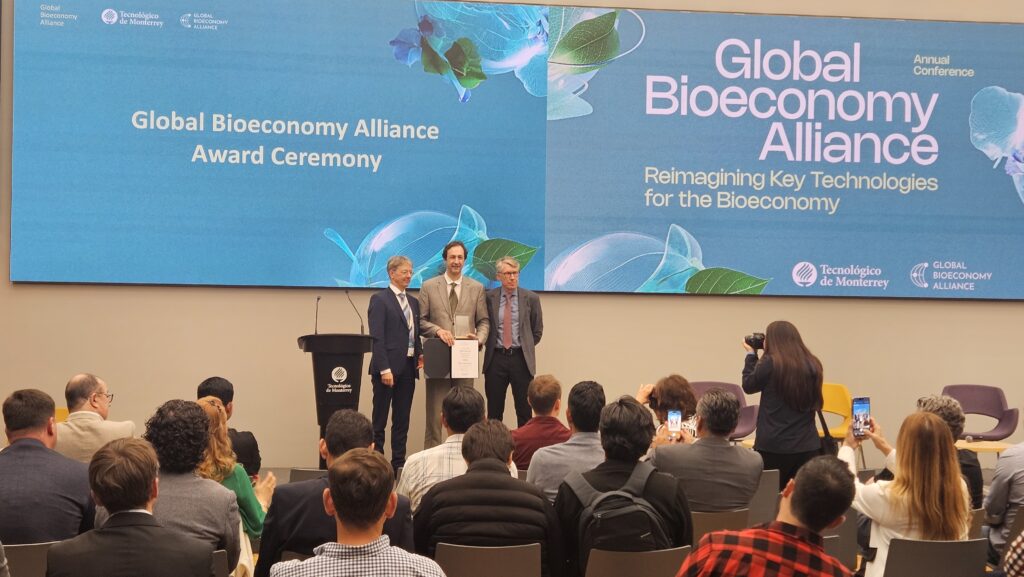
This week, our Founder and CEO professor Wim Soetaert received the Global Bioeconomy Award for Impact and Leadership in the Bioeconomy 2026 in Monterrey, Mexico. The international award is supported by Novo Nordisk Foundation and presented by the Global Bioeconomy Alliance, a worldwide network of universities and research organisations committed to research, education and innovation in the bioeconomy.
The jury praised Soetaert for bridging the notorious ‘valley of death’ through his initiatives: the gap between laboratory research and market-ready industrial production. Where many inventions founder at that stage, he built a bridge to overcome this hurdle that has a global impact.
From idea to industrial cluster
Soetaert is an entrepreneurial professor. ‘I want to see the impact and tangible results of my work in the form of new biobased products on the market,’ he says. In 2005, Soetaert founded Ghent Bio-Energy Valley, a public-private partnership that brought companies together around a single plan: to build a large, integrated biorefinery complex in the Port of Ghent. In 2006, the Belgian federal government allocated the majority of the biofuel quota to the Ghent-based companies of Ghent Bio-Energy Valley.
Since production started in 2008, about €650 million has been invested in new plants. Today, the cluster has grown into one of the largest integrated bioenergy sites in Europe, with an annual turnover of more than €1 billion. The biorefinery at the Rodenhuize Dock in the Port of Ghent has an annual production capacity of 475,000 tonnes of biodiesel, 250,000 tonnes of bioethanol and 240 MW of bioelectricity.
The world comes to Ghent
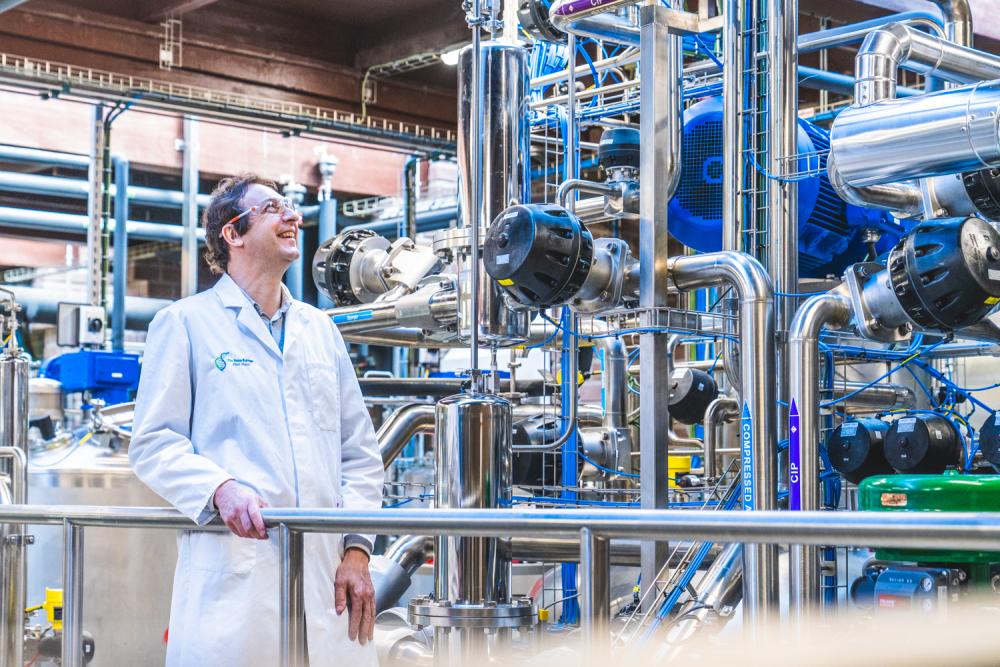
In 2009, Soetaert launched the Bio Base Europe Pilot Plant (BBEPP), made possible by a €21 million Interreg project. There, bio-based products and processes are scaled up from the lab to industrial scale. Companies from all over the world come to Ghent to scale up their new lab scale process into an industrial production process. BBEPP has grown by an average of 25% a year and today employs around 200 people, with a project revenue of approximately €30 million a year. Since its launch, some €100 million has been invested in pilot and demonstration equipment for industrial biotechnology.
More than 350 international companies have already made use of its services, accounting for over 1,000 projects and more than 80 new bio-based products on the market. The facility is the largest of its kind in the world and is widely regarded as the gold standard for scale-up in industrial biotechnology. BBEPP also organises Pitch Perfect and Boost the European Bioeconomy, Europe’s largest bioeconomy event, which connects start-ups and innovative companies with investors every year. Soetaert also founded two biotech spin-offs: Inbiose and Amphistar, established in 2013 and 2021 respectively.
Driven by idealism
‘I do this mainly out of idealism,’ says Soetaert, describing what drives him. ‘I am convinced that industrial biotechnology offers a more sustainable way of producing a wide range of products. Ever since I was young, I have been fascinated by how we can use tiny microbes in fermentation processes to make useful products. Today, fermentation has become a technology that is changing the world: from food and vitamins to plastics, dyes, cosmetics and medicines, our microbes make it all.’
‘This award is the ultimate recognition for the ecosystem that we have built here in Ghent, thanks to a fantastic team of dedicated people. Every day, we prove here that industrial biotechnology leads to a more sustainable economy, and that young people are highly motivated to put their talent to work for a better world,’ the award winner emphasises.
For more information or to request an interview with Prof. Wim Soetaert,
please contact:
Lieselotte Cowie
External Press Officer
lieselotte@cowiewriting.be
+32 495 92 58 74


 webdesign