Multiscale Frameworks for Biosolutions
Concept: Developing comprehensive computational modules that simulate the performance and sustainability impact of microbial protein products
FrameBio strives to revolutionise biotechnology by developing comprehensive computational modules that simulate the behaviour of bioproducts for food applications, such as Single Cell Proteins, and quantify their resource dependencies across various scales:
- Microorganism Design and Engineering
- Fermentation Design of Experiments coupled with High Throughput Screening
- Commercial Production Scheme Simulations
- Supply Chain Design
- Planetary Resource Utilization and its Impact on Earths Geophysical Synergies
This will enable to predict the broad sustainability impacts of SCP BioSolutions which offer a wide range of possibilities for food production and warrant an unmatched advantage over conventional agriculture-based alternatives in utilising waste and undervalorized resources such as lignocellulosic biomass, wastes from the food/feed production, and more recently CO2 and derived chemicals.
The FrameBio Doctoral Network will train 13 PhD Candidates in genomics, metabolomics, fermentation and process optimisation, and data science and sustainability assessments in a unique venture. The research and training activities will be conducted by the Doctoral Network in 8 world-class universities in 7 European countries and will elucidate the impact of dynamic inputs and any disruptions to the production systems.
ACTIVITIES of the Bio Base Europe Pilot Plant
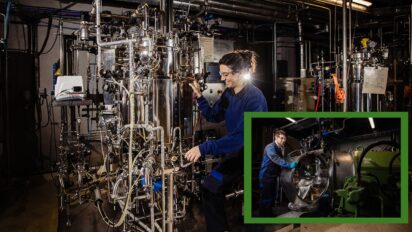
BBEPP will develop and assess fermentation and DSP strategies for the production of non-conventional microbial proteins
PARTNERS
- Danish Technical University (DTU), DK
- Bio Base Europe Pilot Plant, BE
- RWTH Aachen University, DE
- Sant’Anna School of Advanced Studies, IT
- TFTKA – Food Innovation and Biotechnology, EE
- Technical University Berlin, DE
- University of Iceland, IS
- CSIC, ES
SUPPORTED by
This project has received funding from the European Union’s Horizon Europe research and innovation programme under the Marie Skłodowska-Curie grant agreement No. 101227645.
Other Project in the Spotlight

FERM eiwit
The ‘FERM eiwit’-project focuses on strengthening Flanders as an international leader in fermentation-based proteins.
Read More
 webdesign